Skip to content

Introduction

The Northern Flicker Woodpecker (Colaptes auratus) is a fascinating and diverse species that captures the hearts of bird enthusiasts across North America. In this blog post, we will focus on the equally remarkable but often overlooked half of this species: the Female Northern Flicker Woodpecker. With her distinctive features and vital role in the bird world, the female Northern Flicker deserves recognition and appreciation.

1. A Cloak of Diversity
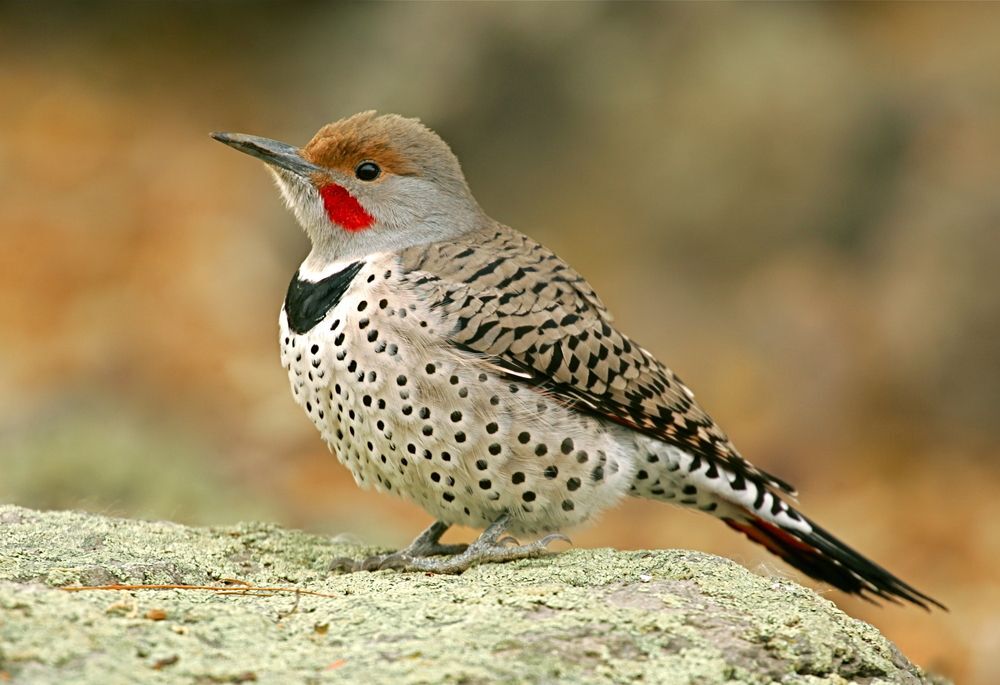
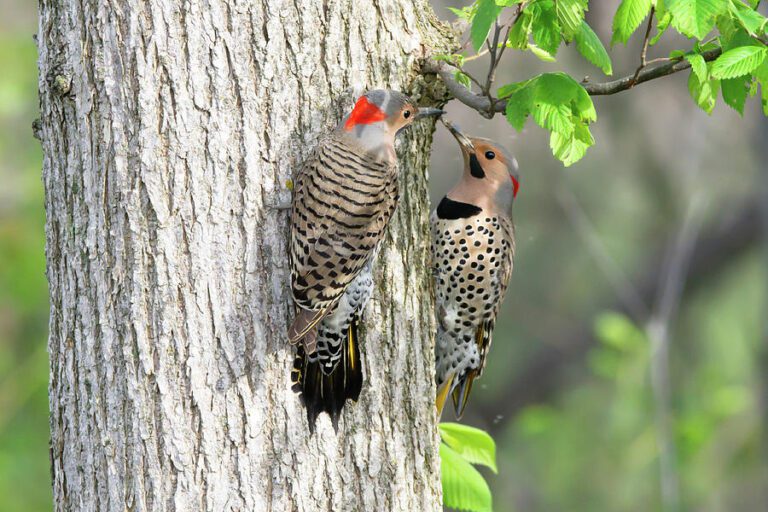
Northern Flicker Woodpeckers are known for their striking plumage. The female Northern Flicker boasts a unique combination of features that distinguish her from the male. While the male typically displays a striking black “mustache” and striking markings, the female possesses a softer, subtler appearance. Her plumage is often adorned with mottled and dark spots, creating a beautiful, understated elegance.

2. Life Amongst the Trees
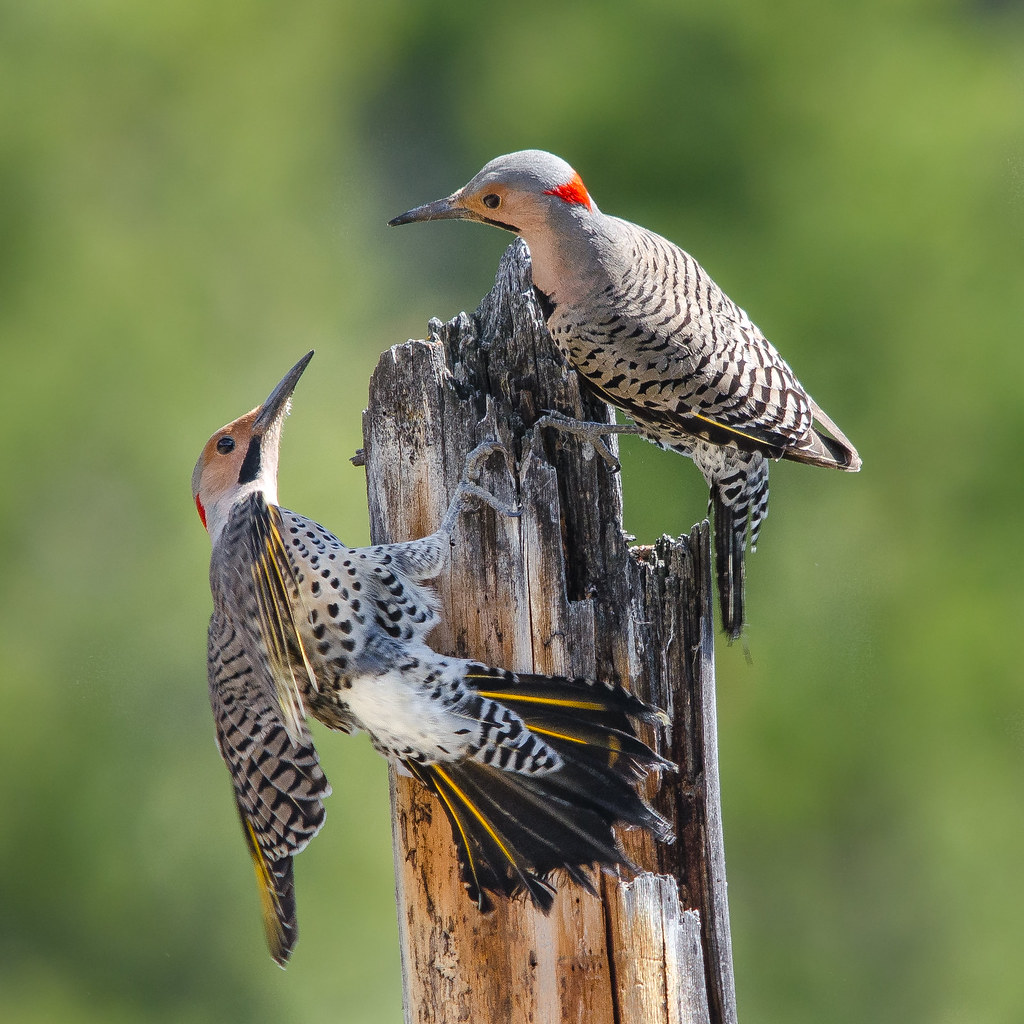
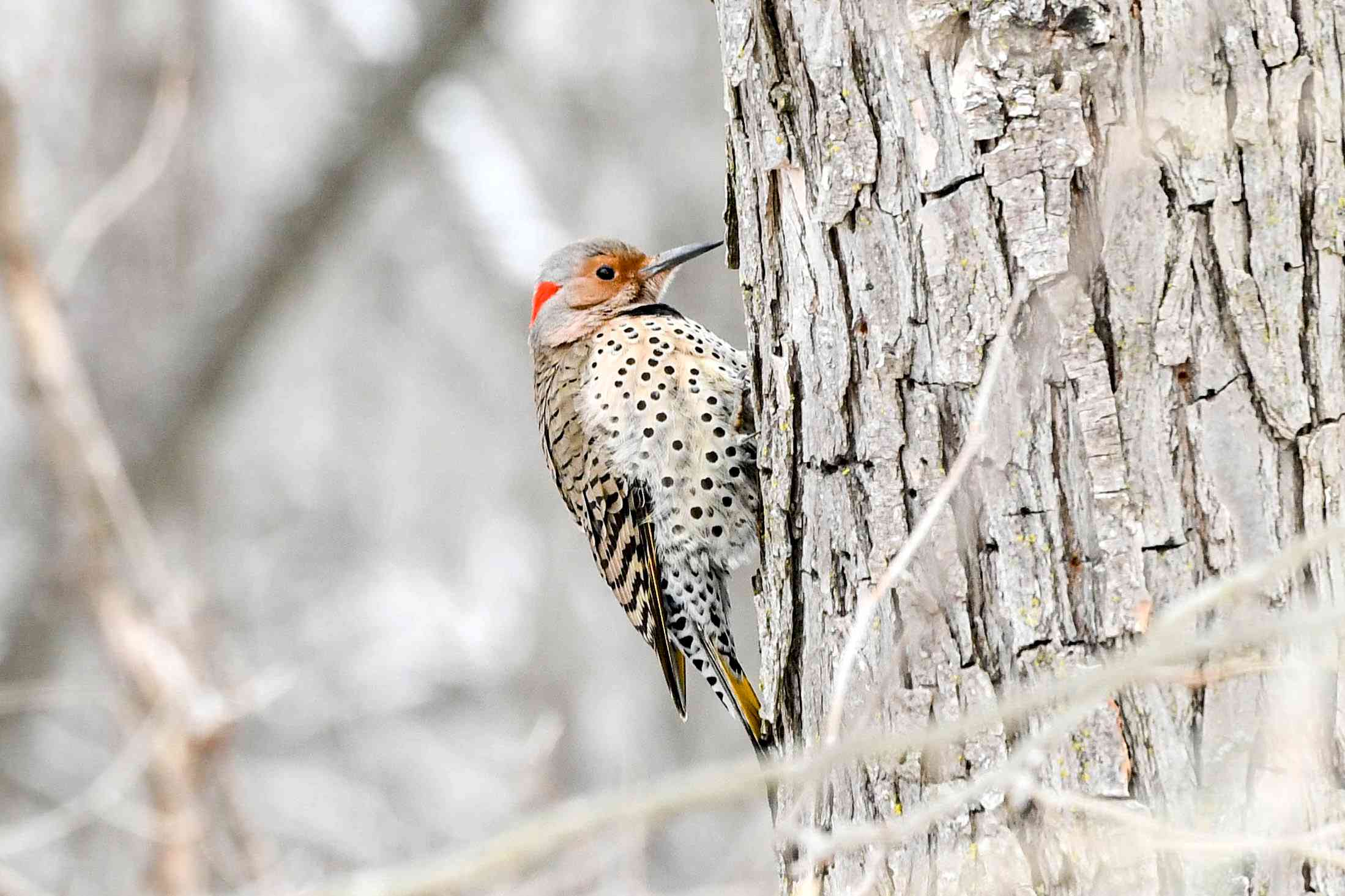
Like their male counterparts, female Northern Flickers are adept woodpeckers, known for their tree-dwelling habits. They are often seen perched on trees, using their strong beaks to extract insects from the bark. These birds play a vital role in controlling insect populations, thereby contributing to the health of the ecosystems they inhabit.

3. Foraging and Nesting
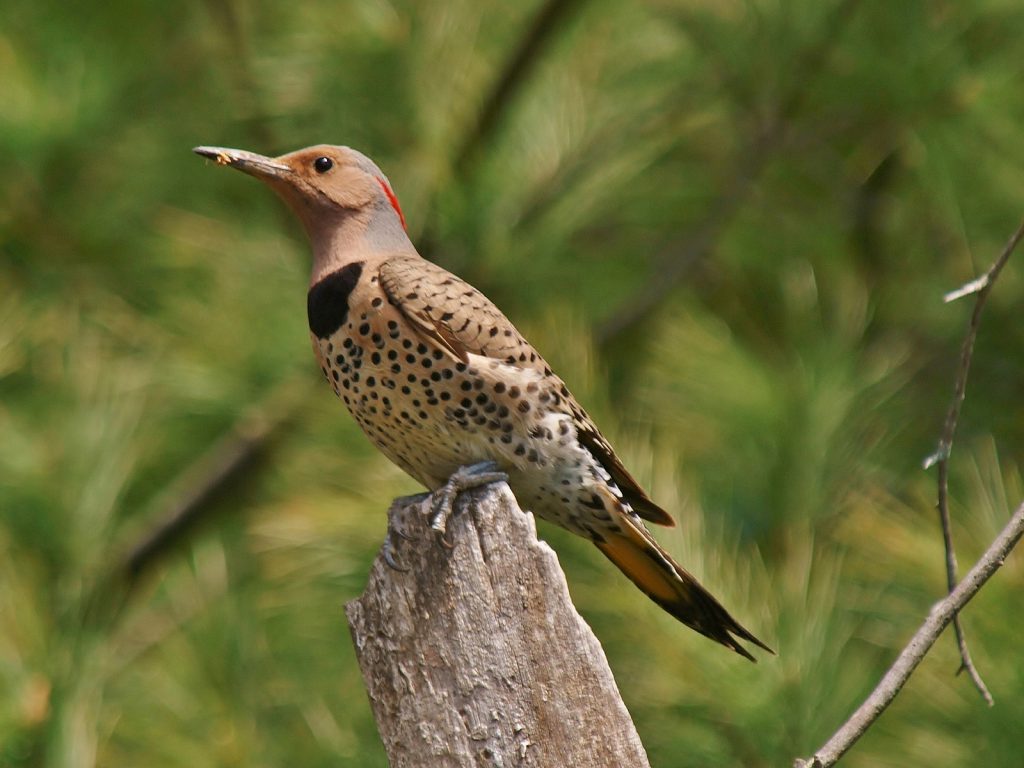
Female Northern Flickers actively engage in foraging for food, often on the ground, where they seek ants and other insects. These birds are also skilled excavators, creating nesting cavities in trees or occasionally using abandoned cavities. Their unique nesting habits make them an integral part of their local bird communities.

4. The Subtle Songster
While Northern Flickers are not known for their typical woodpecker drumming, they do produce distinct vocalizations. The female’s calls and “wick-a-wick” sounds contribute to the symphony of bird songs in the woods. These vocalizations serve a range of purposes, from attracting mates to communicating with their young.

5. The Conservation Challenge
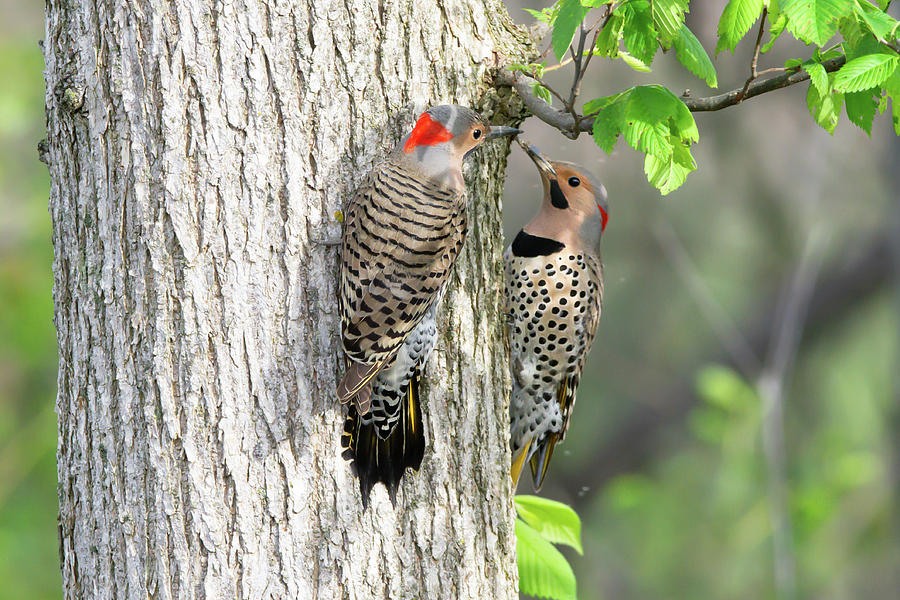
As urbanization and habitat loss continue to impact bird species across North America, the Northern Flicker Woodpecker faces challenges to its nesting and foraging habitats. Conservation efforts that protect and restore these habitats are vital to ensure the continued well-being of the female Northern Flicker and her male counterpart.

Fecal Content

In conclusion, the Female Northern Flicker Woodpecker is an integral part of North America’s avian diversity. Her distinctive appearance, vital roles in insect control and nesting, and subtle vocalizations are all facets of this remarkable bird. As we strive to preserve and protect our natural landscapes, it is crucial to recognize and appreciate the female Northern Flicker and her contributions to the rich tapestry of North American birdlife.
Introduction

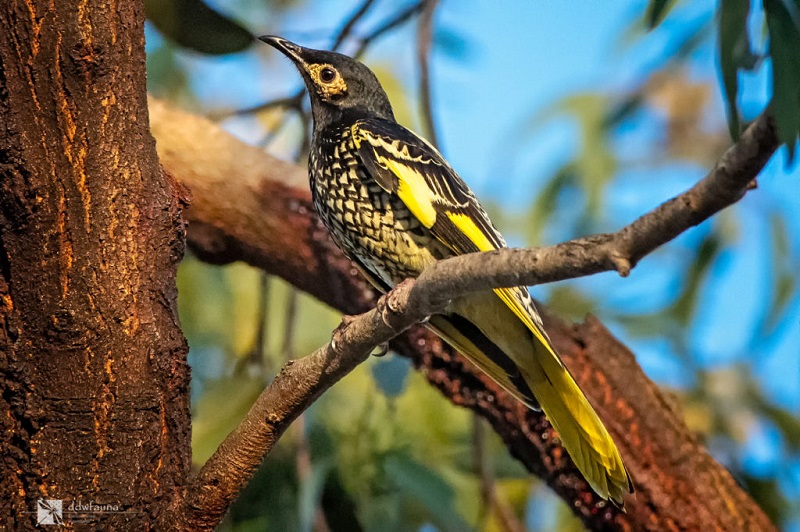
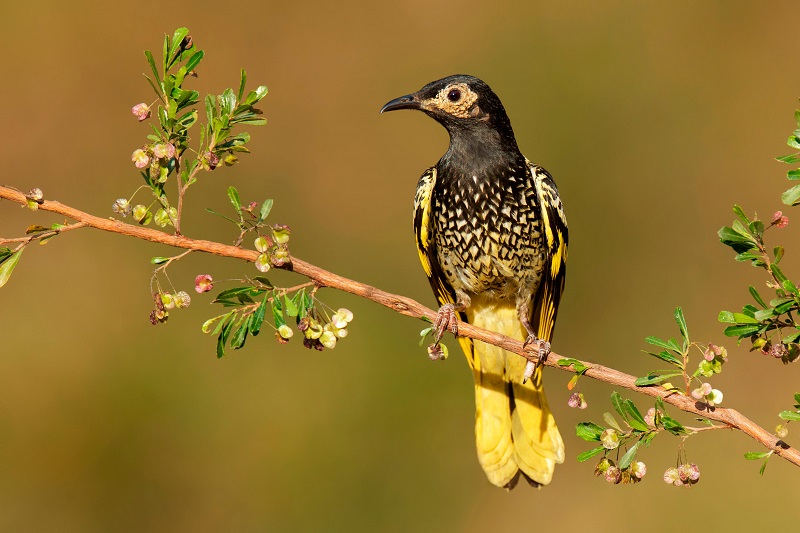
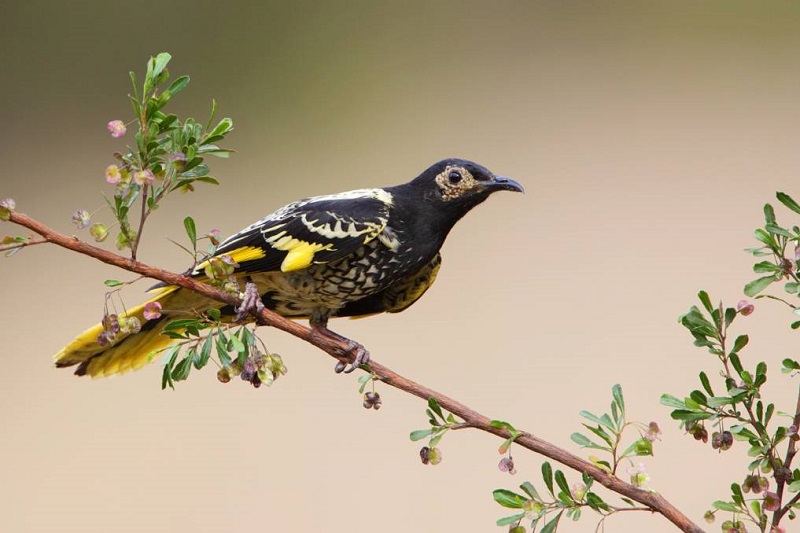
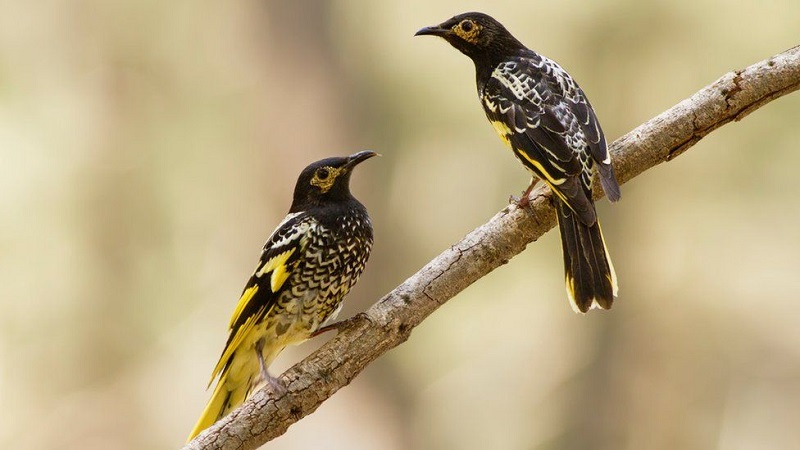
Australia, renowned for its unique and diverse wildlife, is home to some of the world’s most remarkable avian species. Among these, the Regent Honeyeater (Anthochaera phrygia) stands out as a true jewel, both in its appearance and its ecological significance. In this blog post, we’ll embark on a journey to discover the beauty, ecology, challenges, and conservation efforts surrounding the critically endangered Regent Honeyeater.

1. A Visually Striking Beauty

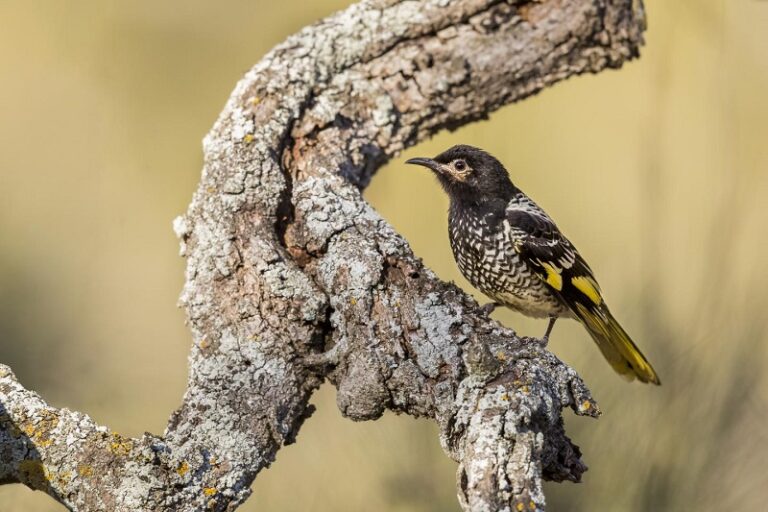
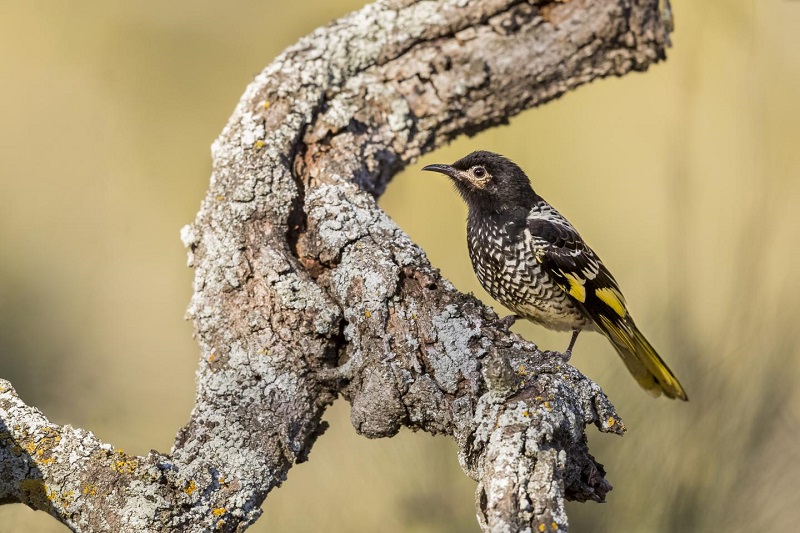
The Regent Honeyeater is aptly named for its striking appearance. It showcases a predominantly black head adorned with bright, bold yellow markings. These vibrant colors, coupled with its distinctive facial markings and long, slender bill, make it an unmistakable and captivating bird to behold.

2. Ecological Importance

The Regent Honeyeater plays a crucial role in Australia’s ecosystem. As nectar feeders, they are essential pollinators for various native plants, particularly eucalypts. Their feeding behavior supports the reproduction of these plants and contributes to the overall biodiversity of the region.

3. A Melodic Masterpiece

In addition to its appearance, the Regent Honeyeater is known for its melodious and complex songs. Their calls consist of a combination of musical notes and chirrups, making them an auditory delight for birdwatchers. These unique songs are not only beautiful but also serve in communication, particularly during courtship.

4. The Perilous Decline

Despite their striking beauty and ecological significance, Regent Honeyeaters have faced a significant population decline. Habitat loss due to deforestation, land clearing, and urban development has drastically reduced their breeding grounds. Moreover, the decline of their primary food source, nectar-producing plants, further threatens their survival.

5. Conservation Efforts

Efforts to save the Regent Honeyeater from extinction are ongoing. Conservationists, researchers, and bird enthusiasts are working tirelessly to protect and restore their habitat. Reforestation projects focus on replanting native nectar-producing trees and shrubs to provide the birds with much-needed food sources and shelter.

Fecal Content

In conclusion, the Regent Honeyeater is a visual masterpiece, an ecological hero, and a melodious wonder of Australia’s avian world. While facing perilous population declines and the threat of extinction, this bird is a testament to the urgent need for conservation and habitat restoration efforts. By protecting the Regent Honeyeater and its habitat, we not only safeguard the future of this magnificent species but also contribute to the preservation of Australia’s unique and fragile ecosystems. The hope is that with concerted efforts, this critically endangered avian jewel will once again thrive in the wild, filling the Australian skies with its vibrant colors and enchanting melodies.

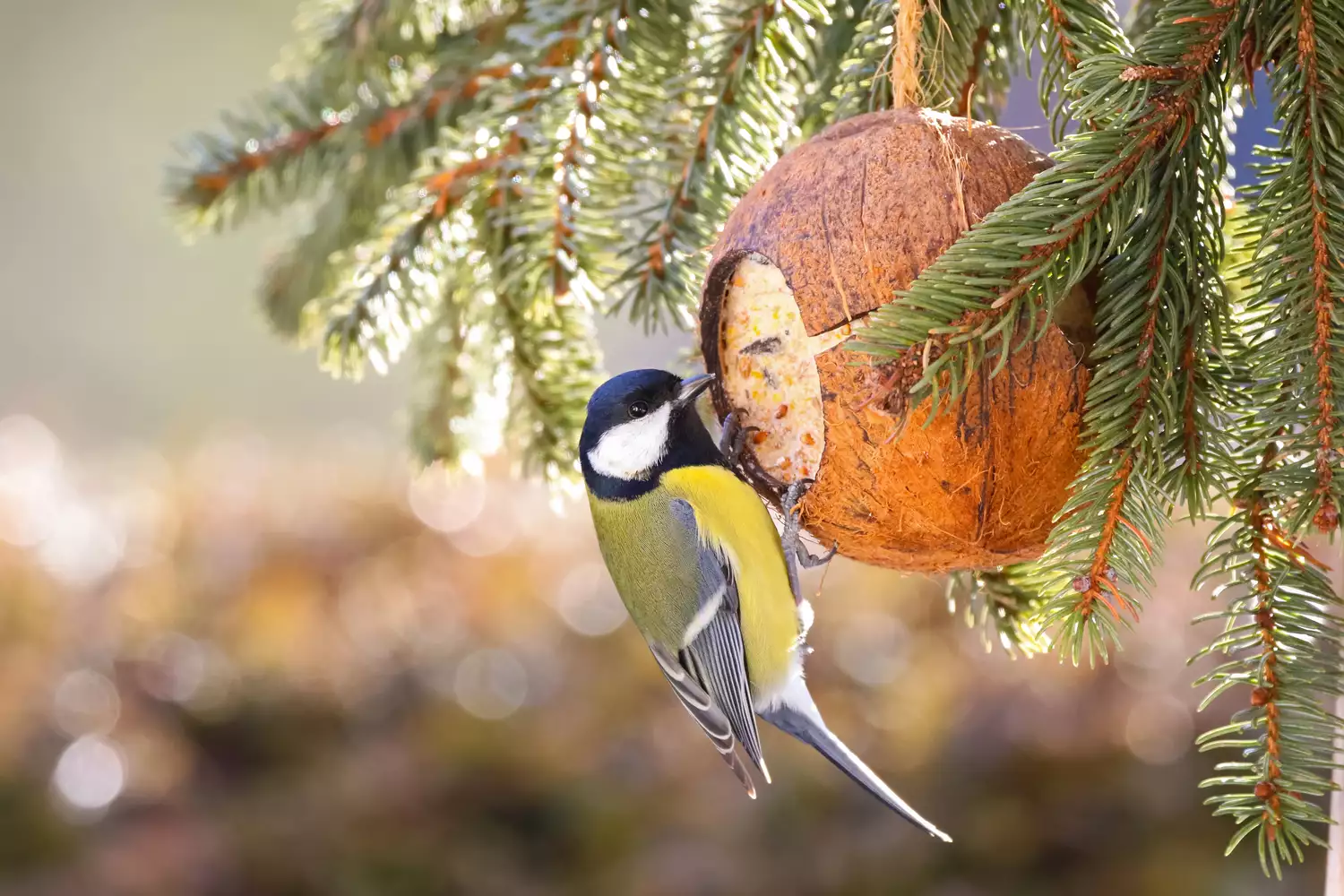
A great tit eating from a coconut feeder.

Ever look around the table when the “aspiring chef” in your family unleashes her latest culinary creation? Everybody seems to be waiting for someone else to take that first fateful bite.

Will it be gross? Not so gross? Or death in a burrito?

It turns out birds also rely on the reaction of friends to gauge the gross-ability factor of new and strange foods.

Particularly, blue tits and great tits — birds with a wide range of culinary pursuits that also tend to forage together.

A study, published this week in the Journal of Animal Ecology, suggests they know what’s good eating by letting another braver tit do the taste-testing. In fact, as the study reveals, even watching a video of those reactions helps them determine which meals to file under “That’s disgusting.”

For the study, researchers at the University of Cambridge prepared a meal for two groups of birds, 12 blue tits and 12 great tits. And by soaking the food in a bitter solution, they made sure it tasted dreadful. Then they marked the bad biscuits with a little black square.

How exactly does a bird make it known that the candidate for a meal has failed utterly? It can’t exactly scrunch up its beak or tell thinly veiled lies about how it tastes “interesting.”

But the birds managed to make their feelings on the repast clear. They shook their heads and wiped their beaks. No thanks.

Fair enoug. But the real surprise came when the Cambridge researchers showed a video of the taste-test to another group, also comprising 12 blue tits and 12 great tits. Apparently, they were paying attention — because when the same unpleasant morsels with little black squares on them were offered up, they sampled far fewer of them.

Interestingly, researchers also noted that blue tits learned the most by watching other blue tits. Great tits, the much bigger bird, however, could easily pick up visual cues from either species.

This may be due to the blue tit’s small stature, which may impose stricter dietary guidelines.

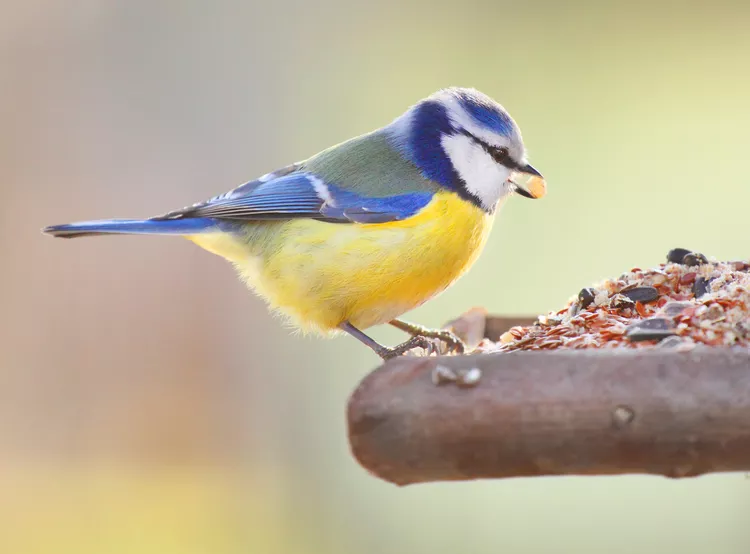
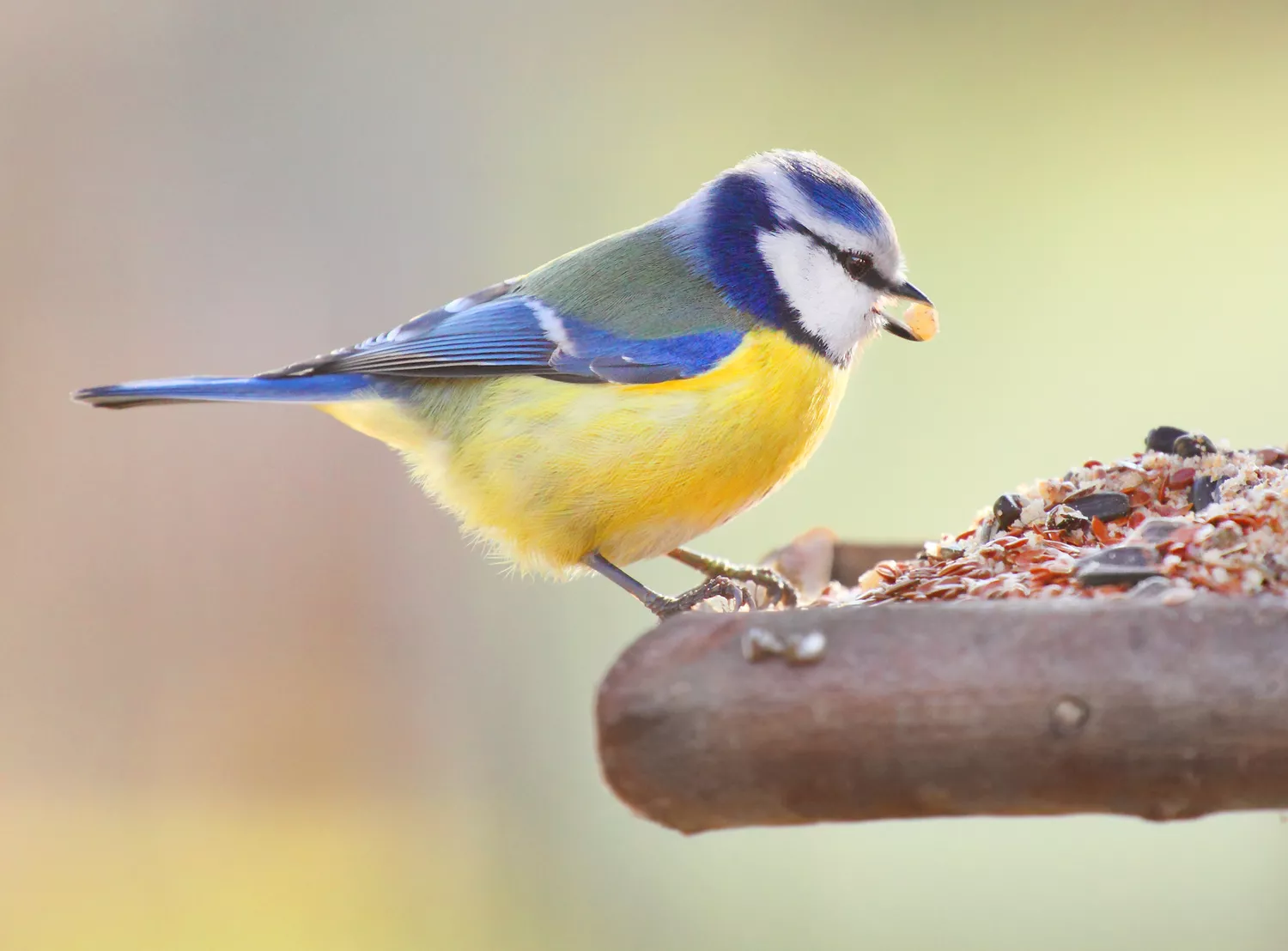
A blue tit eating seeds.
Blue tits learn best by watching their own kind eat, which may suggest they have more specific dietary restrictions. Kletr/Shutterstock

“The two species differ in size, and it is possible that great tits can cope better with chemical defences because they are larger than blue tits,” study co-author Liisa Hämäläinen, an ecologist at the University of Cambridge, tells New Scientist. “The costs to consume potentially toxic food might therefore be higher for blue tits.”

We know that animals from different species can rely on each other to gather essential information about their environment. Squirrels, for example, determine whether it’s safe to go outside by eavesdropping on conversations between birds.

But, as New Scientists notes, this is only the second time birds have been spotted taking dining cues from another species. Previously, only red-winged blackbirds and common grackles shared food notes.

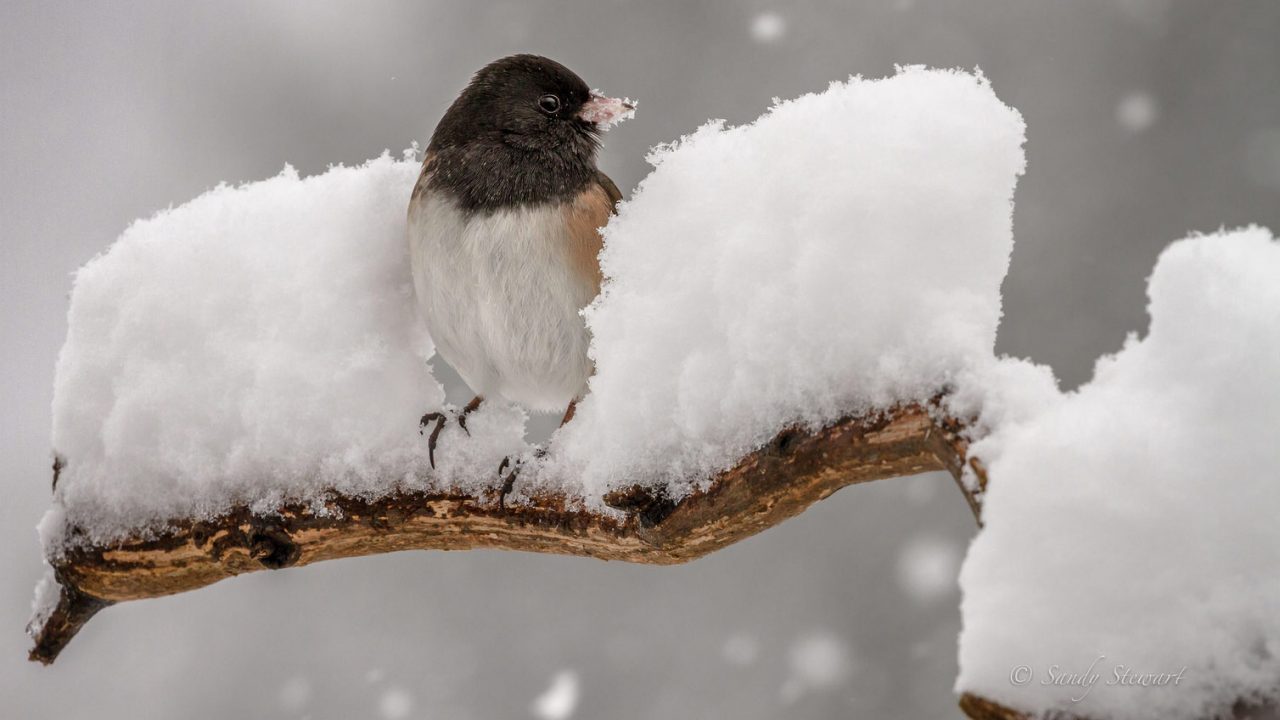
Dark-eyed Junco by Sandy Hill

Dark-eyed Junco by Sandy Hill via Birdshare.

On cold winter days I am always astounded that there are any birds left alive, especially considering that most winter feeder visitors weigh in around 10–25 grams (the weight of 2-5 nickels)! But it turns out that birds employ many of the same strategies I was using inside my house—plus a couple more—to keep their motors running through cold snaps.

So here’s my 5-step survival guide for birds in the cold, complete with links to some fascinating research papers (or at least they were fascinating to me, back in the days when I was a graduate student researching winter survival in Montana).

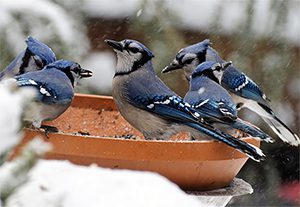
  • Blue Jays fill up on needed calories. Photo by Kathleen via Birdshare.

    1. Get Some Friends To Hang Out With

    Especially if the weather is crummy. Ever notice that nearly all of the birds that hang around in the winter do so in flocks? Having other birds around makes it less likely that something will eat you; more eyes = less chance of a predator sneaking up. Plus, if something does sneak up, you only have to be faster than the guy foraging next to you! Friends are also good at letting you know where the primo food is.

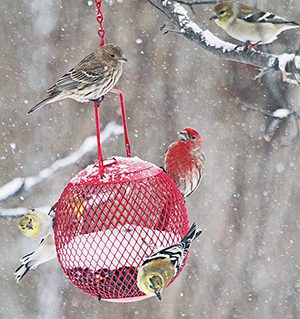
  • A mixed group of birds at a snowy feeder. Photo by Steve Shelasky via Birdshare.

    2. Eat. As Much As Possible

    Park yourself in front of a feeder, some seedy plants, or anywhere there is food (preferably the heaviest, fattiest foods possible, like black-oil sunflower and suet, yum!) and consume. If anyone gets in your way, chase them off and keep eating–unless, of course, they chase you off first. However, don’t eat too much, because it also makes you slower and more likely to get eaten.

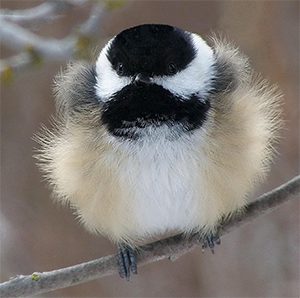
  • A fluffed up Black-capped Chickadee. Photo by Mike Wisnicki via Birdshare.

    3. When You Can’t Eat More, Get Puffy And Rest

    Your fluffy down feathers help complete the food + feathers = warmth equation. With food in your belly, you can use your metabolism to generate heat. Feathers, in addition to keeping cold air away from your skin, do a great job of trapping body heat instead of letting it dissipate. If you get the chance, tuck a foot or a whole leg up in there. But if you’re a woodpecker–tough luck, because you don’t have any down feathers.

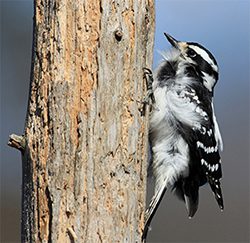
  • A Downy Woodpecker in the wind. Photo by Barbara Lynne via Birdshare.

    4. Stay Out Of The Wind

    Here’s an important hint: if the wind is blowing, go to the other side of the tree and avoid it. Seems simple, right? But it works–trust me (or trust Dr. Thomas Grubb and his 1977 treatise Weather-dependent foraging behavior of some birds in a deciduous woodland: horizontal adjustments). And for any birders out there—you might be surprised how often you see birds doing this (whether to dodge wind or to avoid rain or hot sun) once you start looking for it.

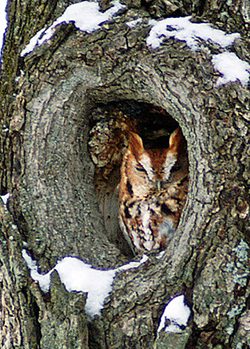
  • An Eastern Screech-Owl roosting in a tree cavity. Photo by avicentric via Birdshare.

    5. Roost In A Cavity

    You’ll never find a warmer spot to sleep than in your own down feathers, nestled in a nook small enough that you can warm it up with any extra heat that does escape. Old woodpecker cavities, crannies beneath the eaves of houses, even a tunnel in the snow… they’re all warmer than spending the night (literally) out on a limb. As an additional trick, some small birds such as kinglets and chickadees can drop their body temperature and go into controlled hypothermia to save energy.

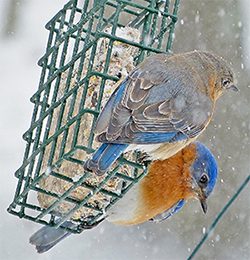
  • Eastern Bluebirds at a suet feeder. Photo by Bob Vuxinic via Birdshare.

    6. (Bonus Step) Put It All Together

    Finally, whenever possible, combine guidelines 1-4 for the ultimate in energy-saving & crop-filling goodness (as illustrated here by these puffy Eastern Bluebirds, perched comfortably within bill’s reach of a cake of fatty suet).

Shelter Polanka helps animals in trouble. We will dedicate several articles to animals, former wards of the shelter, who have managed to find happiness in this world.

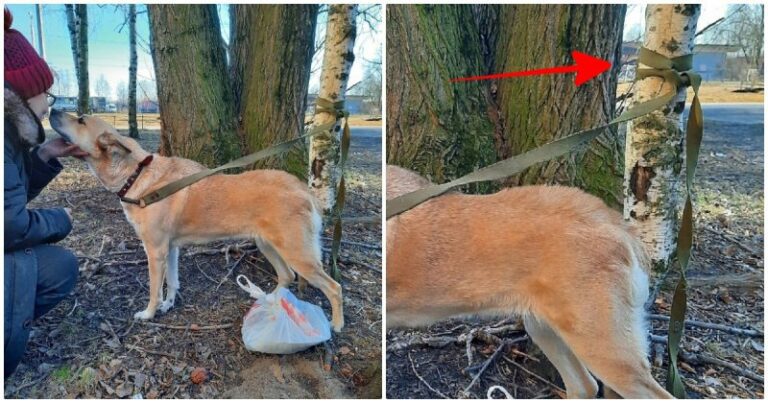
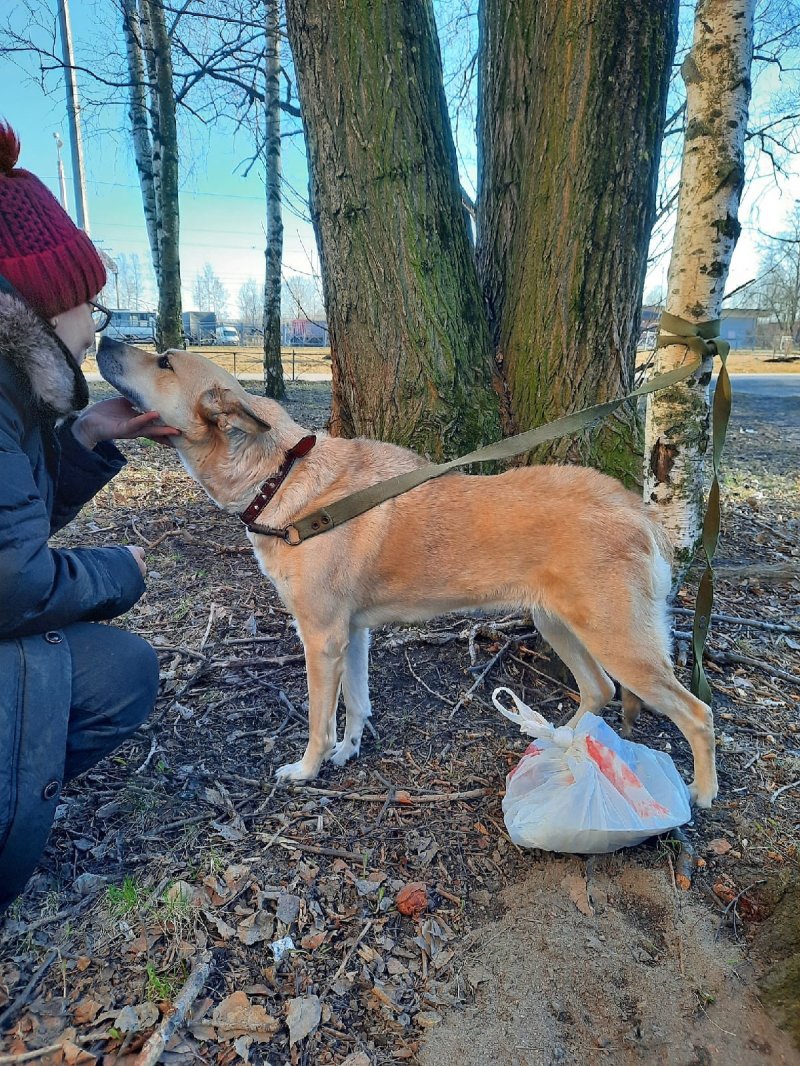
The dog lived with the family and at some point became unwanted. The former miserable owners came up with no other solution than to simply tie the dog to a tree in the park.

A knotted bag of food was placed next to the animal. The animal was discovered by people walking in the park and contacted volunteers at the Polanka shelter.

The shelter staff and visitors who come to walk the dog liked the dog very much. One day Vera came to see the dog and fell in love with it.

For a while, they found common ground within the walls of the orphanage, and then the woman took the girl in. Its name is now Gela.

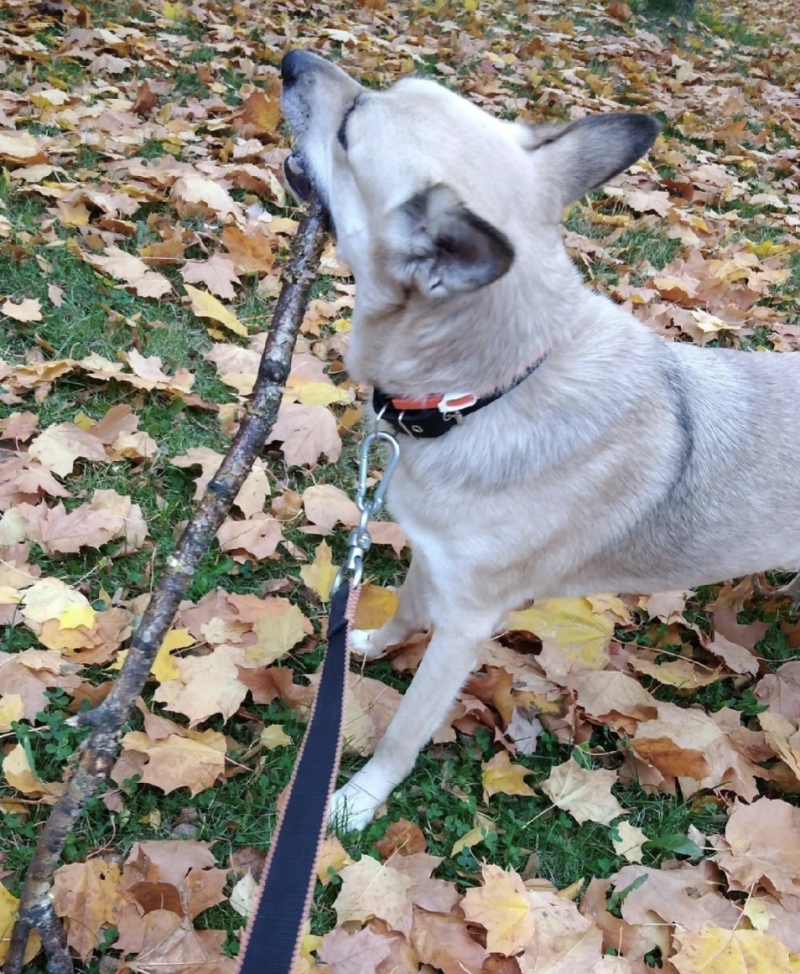
The owner says that Gela has adapted quickly to the new place. It loves to sit on the sofa, cuddle with its owner and play. It does not give up its toys yet, it just carries them in its teeth, but there is still work to be done on that. After all, not all at once!

There is still a cat living at home, but the dog is very relaxed about it. Purr-face just observes the new family member and Gela wants to play with it as soon as possible. During its walks Gela has made friends with the local dogs. Vera asks for advice from a dog breeder who will help her with the training. Such is the story that began rather sadly. But it is good that the dog was seen and not passed by and found a home.