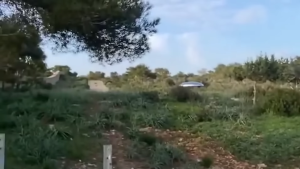
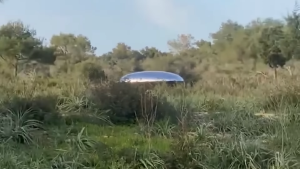
Unidentified flying object (UFO) tries to hide deep in the forest to evade arrest by US police.
A farmer in frace has reported a strange sighting on his farm, which appears to involve an unidentified flying object (UFO).
At first, the farmer thought it might be a helicopter or a blob, but as he got closer, he realized it was something he had never seen before.
The farmer quickly grabbed his smartphone and started recording a video of the object.
While some people believe the video shows an aesthetic UFO, others argue that it could be a hoax or a patrol phenomenon, like a ball of light or a meteorite.
The incident has attracted the attention of local authorities and ufologists, who are investigating the case.
If you are interested in UFO sightings and want to know more about this case, you can watch the video and decide for yourself.
Photo Credit: PaleoEquii / Wikimedia Commons CC BY-SA 4.0
A long, long, long time ago, there existed a sea creature that was similar to a cuttlefish… but it was also like a slug, and kind of resembled a leech as well. When a fossil of this bizarre creature was discovered hundreds of millions of years later, it was named for its discoverer and called the “Tully monster.” Scientists have been unable to agree on how the creature should be classified, shrouding the specimen in mystery.
Discovery of the Tully monster
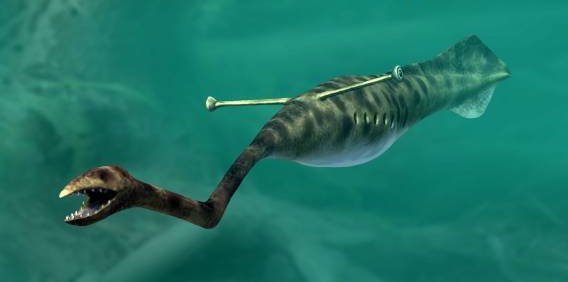
The Tullimonstrum gregarium. (Photo Credit: Nobu Tamura / Wikimedia Commons CC BY-SA 4.0 / cropped)
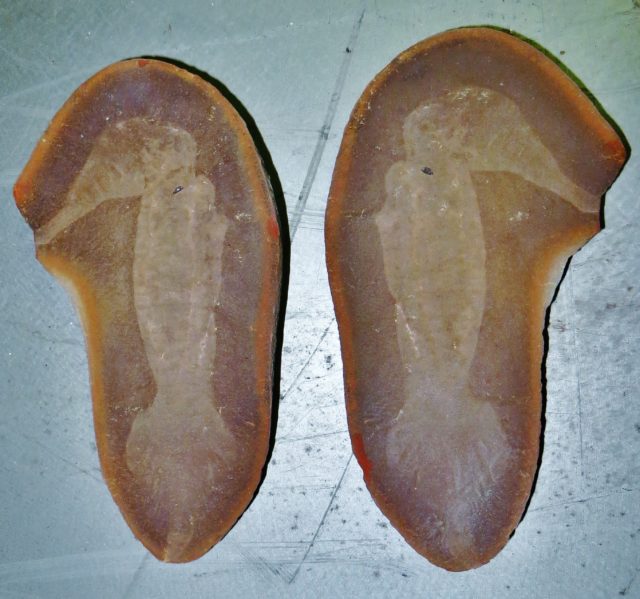
The scientific name for the unclassifiable specimen is Tullimonstrum. The creature’s discovery was first made in 1958 when fossil collector Francis Tully noticed it in the fossil beds of Mazon Creek, located in Illinois. The particular fossil Tully found dates as far back as 307 million years old.
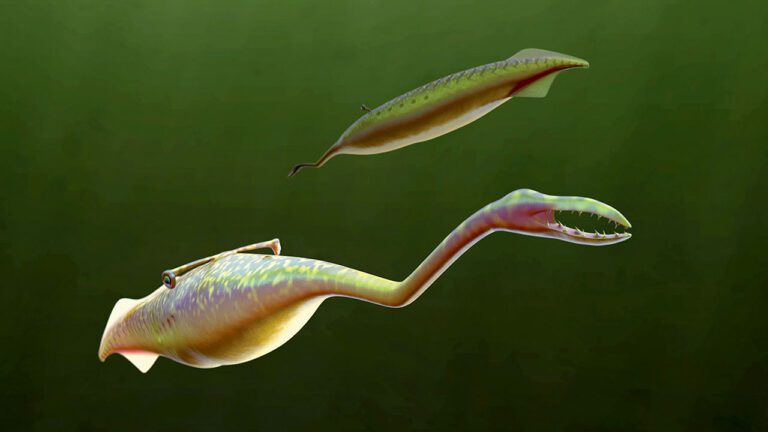
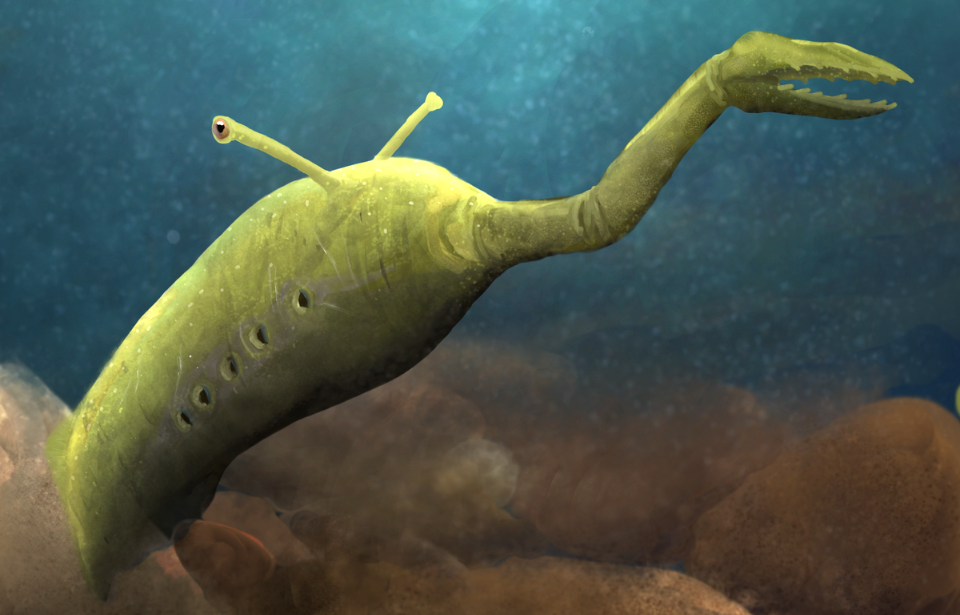
To look at the Tully monster, it’s reasonable to say that it’s reminiscent of a slug. At its mid-body, what are believed to be eyes protrude outward on two stalks, like those of a slug. However, in the place where one might assume the mouth would be located is a long, thin appendage with a claw at its end. This claw appears to have teeth.
The strange characteristics of the Tully monster make it difficult to classify it either as a vertebrate or invertebrate. As a reminder, a vertebrate is a creature with a backbone. Mammals, fish, birds, and reptiles are vertebrates. Invertebrates are creatures without backbones, like insects, octopuses, and crustaceans.
A 2016 study classified it as a vertebrate
A T. gregarium, or Tully monster, fossil. (Photo Credit: Ghedoghedo / Wikimedia Commons CC BY-SA 3.0)
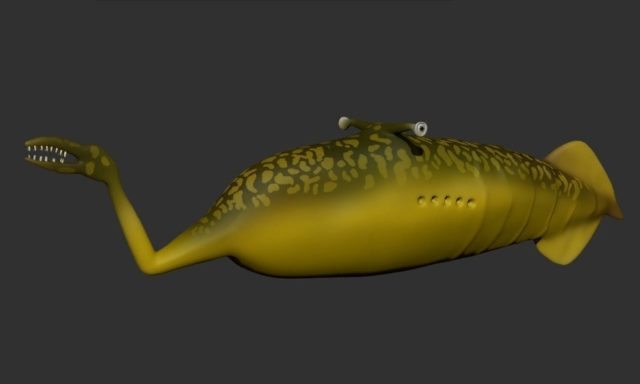
In 2016, a group of scientists conducted a study and said the Tully monster had finally been classified. Their evidence suggested that it was, in fact, a vertebrate. The study focused on prominent features in the creature’s physical shape. Looking at the fossil, the researchers claimed that there was a notochord in the Tully monster.
A notochord is a flexible rod that runs down the length of the body. Although it’s not considered to be a spinal cord, it is considered to be the precursor to a spinal cord. So the presence of the notochord suggested to these scientists that the Tully monster is best classified as a vertebrate. In this way, they likened it to the same group as lampreys.
The study also looked at pigment granules located in the eyes known as melanosomes. By analyzing these, scientists noted that the shape and size were similar to those found in the eyes of other vertebrates, again placing it under that classification.
A newer study challenges this classification
3D model of Tullimonstrum gregarium as a vertebrate. (Photo Credit: Петр Меньшиков / Wikimedia Commons CC BY-SA 4.0)
For a time, the 2016 study was accepted as the closest to a definitive classification scientists were going to reach with the Tully monster. However, a newer study challenged the 2016 outcome, pulling the mystery of the Tully monster back into the scientific discourse.
This newer study also looked at melanosomes in the eyes. Researchers used a particle accelerator, called a synchrotron radiation lightsource, to get a deeper look at the chemical makeup of the melanosomes in the samples from Tully monster fossils and from current vertebrates and invertebrates. The particle accelerator overloads the specimen with intense bursts of radiation that cause the elements inside to become identifiable. Each of the elements has its own specific X-ray signature.
When analyzing the Tully monster’s eye zinc-to-copper ratio, it was determined that the creature more closely resembles invertebrates than vertebrates, contrary to the previous study’s claims. It was also found that the Tully monster’s eyes contained a different type of copper than vertebrates. What’s especially interesting is that even though this unusual creature is different than vertebrates, it’s not identical to invertebrates, either.
The newer study supports the idea that the Tully monster is not a vertebrate, but at the same time, it does not support the idea that it is an invertebrate. It seems scientists are back to square one with the Tully monster, and the mystery continues.
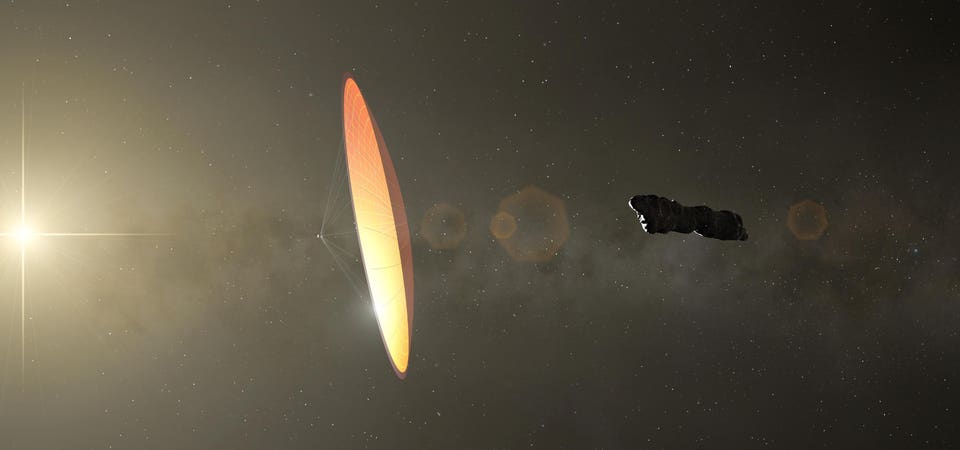
From UFO crash sites on other planets and ‘hidden’ aliens on asteroids to a permanent radio telescope on the far side of the Moon, a new NASA-funded study into the search for intelligent extraterrestrial life
Described as evidence of the use of technology or industrial activity elsewhere in the Universe, the search for technology signatures has only just begun, but it could turn up something surprising without much additional expense, according to
After more or less ceasing its search for technology signatures in 1993 under pressure from politicians, NASA became increasingly involved in SEtI.
Published in the journal Acta Astronautica, the study includes a list of what NASA missions could detect as “evidence of sightings of extraterrestrial life” beyond Earth.
Perhaps most intriguingly, the paper suggests that interstellar probes could have been sent into the solar system long ago, perhaps during our Sun’s last close encounter with other stars.
The closest star to the Sun at this time, Proxima Centauri, is more than 4.2 light-years away, but approximately every 100,000 years a star comes within nearly a light-year of the Sun.
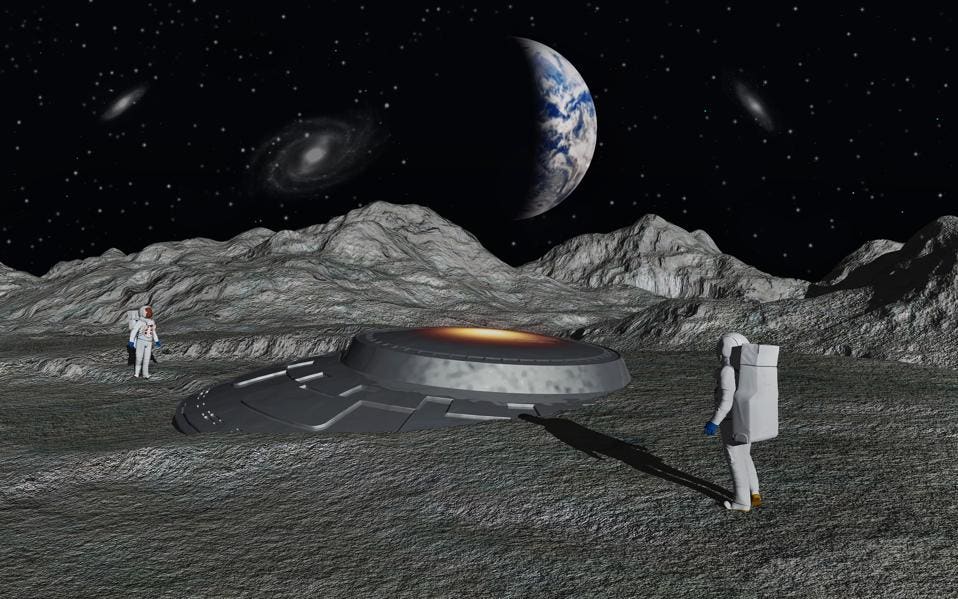
“Such artifacts could have been captured by solar system bodies in stable orbits or could even have crashed into planets, asteroids or moons,” the document states.
The document’s nine suggestions for technology signature search missions include:
Mission 1: Search for crash sites on the Moon, Mars, Mercury or Ceres
the surfaces of these places are ancient and immutable.
Mission 2: Search for contamination using dirt as a template
As recently published for NASA by the same authors, the JWSt could find CFC gases, proof of civilization, around exoplanets if it were 10 times more common than on Earth.
Mission 3: find Dyson spheres
A so-called “waste heat mission” to collect technological waste heat would require surveying the whole sky using a space telescope with sensitivity in many infrared bands.
Mission 4: Build a radio telescope on the far side of the Moon
Until now, the search for technology signatures has been done largely through radio astronomy, and continues to be through the Breakthrough Listen project.
Mission 5: Search for “prowlers” on asteroids
We can be observed by extraterrestrials hidden in resource-rich Near-Earth Objects (NEOs), possibly even asteroids that orbit the Sun with Earth.
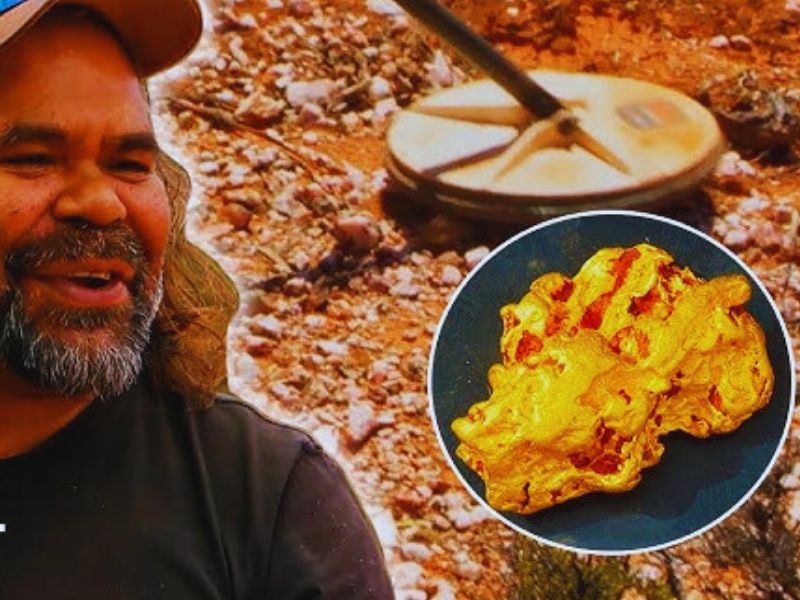
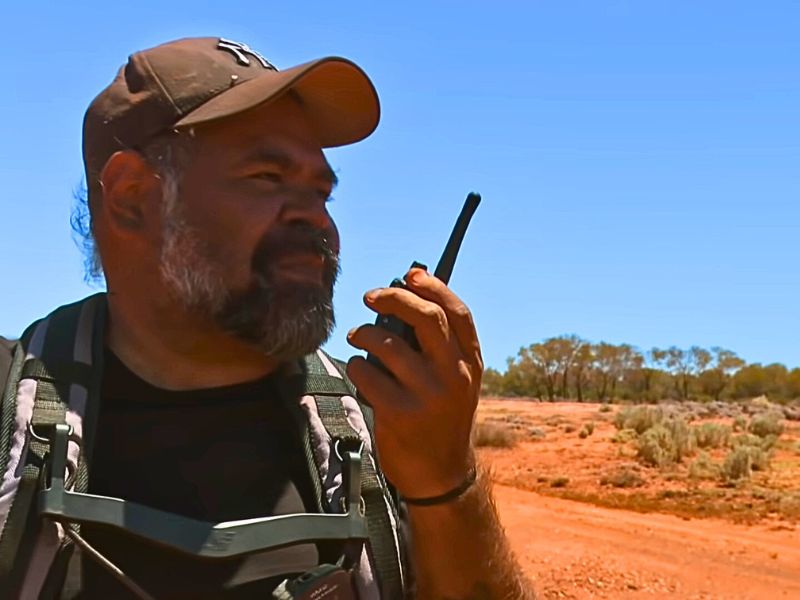
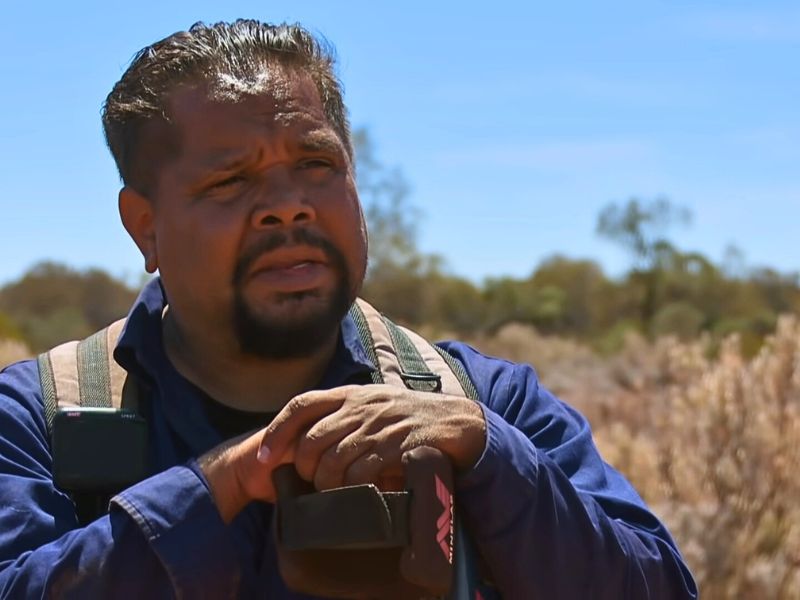
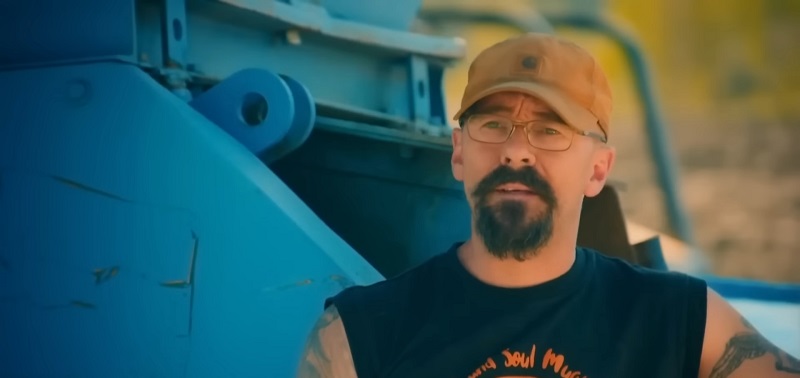
In the rugged gold fields of Western Australia, where the sun blazes at 48 degrees and financial pressures loom large, a team of determined Aussie Gold Hunters—Marcus, Dale, and Linden—are on a quest to secure their future by striking gold. With their season hanging in the balance, they face the looming threat of a mining company taking over their lease. The stakes couldn’t be higher, and the pressure is intense
A Season’s Precarious Start:
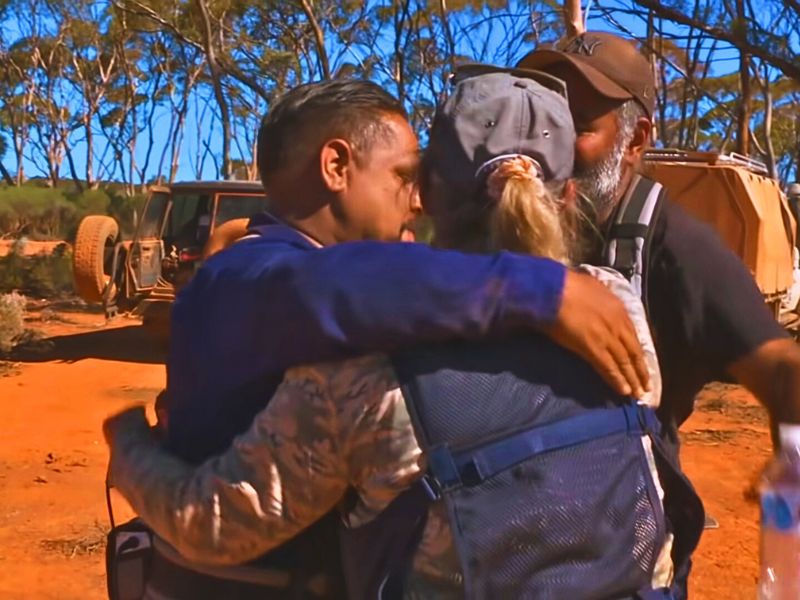
As the season kicks off, Marcus, Dale, and Linden confront a challenging reality: failure is not an option. With families back home depending on their success, the weight of financial constraints bears heavily on their shoulders. The pressure mounts as they know that not finding gold could mean an uncertain future.
The Race Against Time:
With only two days remaining before a mining company claims their lease, the trio races against the clock in their pursuit of gold. Amid sweltering heat and the harsh Australian outback, they search tirelessly, knowing that their opportunity is slipping away.
Linden’s Struggle and Unwavering Determination:
Despite their unwavering resolve, Linden faces a personal struggle as he struggles to find gold. The team’s determination is put to the test as they press on through challenging conditions, including extreme heat, relentless flies, and exhaustion.
A Triumph Over Adversity:
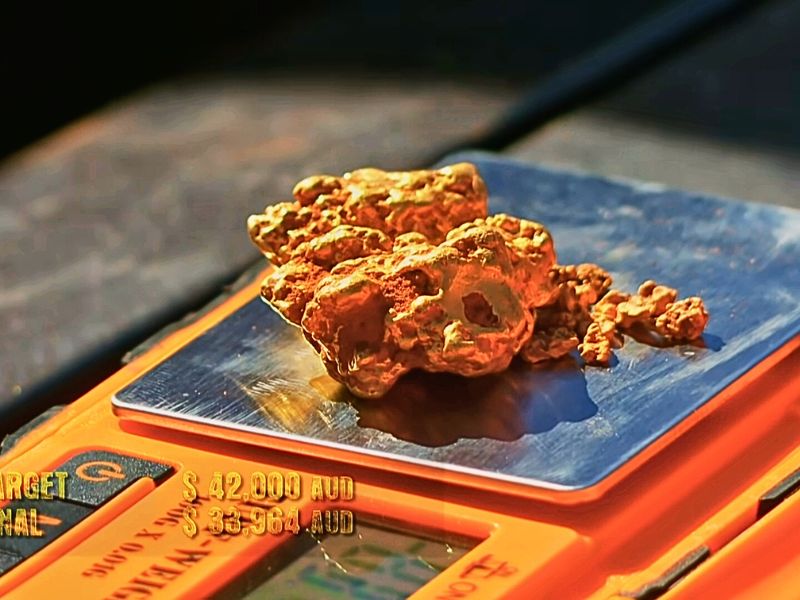
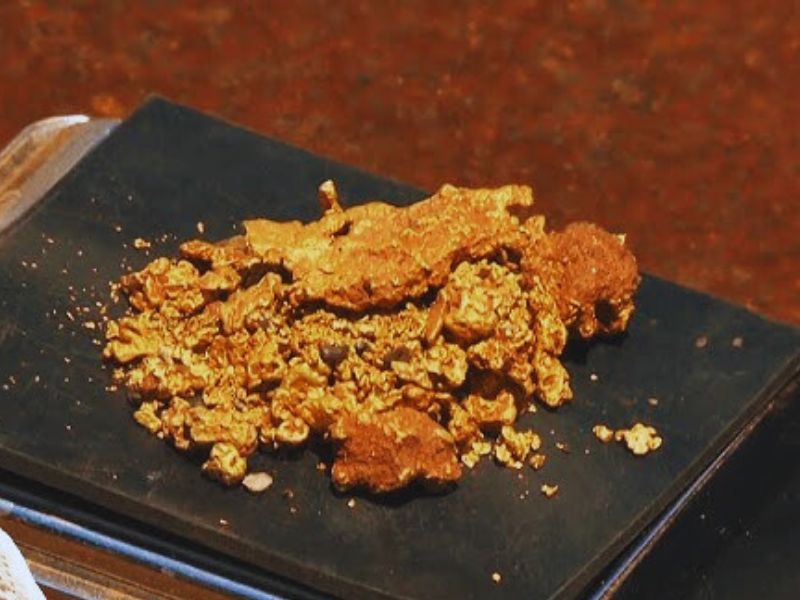
In the face of adversity, with the season’s target of 15 ounces appearing out of reach, the team’s determination pays off. Their hard work yields over 12 ounces of gold, valued at nearly $34,000—more than five times what they found in the previous season. Although they fall short of their target, their success is a testament to their perseverance and the belief in a brighter future.
Conclusion: The Aussie Gold Hunters—Marcus, Dale, and Linden—emerge victorious in their battle against harsh conditions and financial constraints. Their remarkable find, worth five times their previous season’s earnings, serves as a testament to the indomitable spirit of those who brave the challenging world of gold hunting. Their journey proves that, even in the face of adversity, determination and unwavering perseverance can lead to triumph.
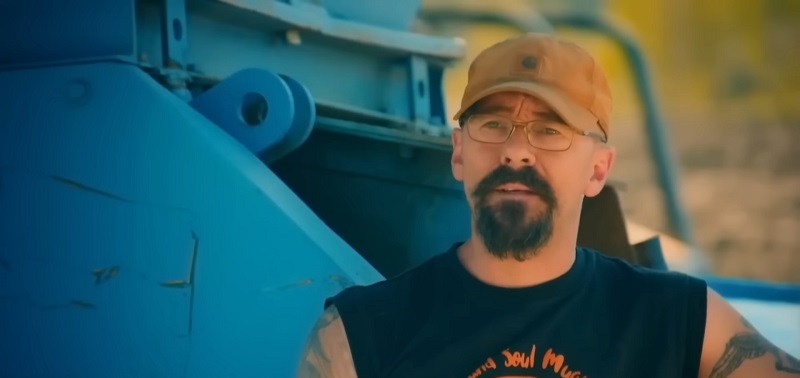
In the rugged world of gold mining, where fortunes can change with the turn of a shovel, Tony Beets steps in as a guiding force, lending his expertise to the Winchester crew. Together, they embark on a daring mission in the perilous “Cursed Cut.” With the goal of uncovering 200 ounces of precious gold and securing lucrative royalties, this team’s journey promises to be nothing short of extraordinary.
Image: Screenshot from Tony Beets Helps The Winchester Crew Make $70,000 On The “Cursed Cut” | Gold Rush video by Discovery Australia
Part 1: Tony Beets allows the Winchester crew to mine a section of land known as the “Cursed Cut” with a 200-ounce gold goal.
Setting the Golden Target” Tony Beets, a seasoned gold miner, joins forces with the Winchester crew in their quest to extract 200 ounces of gold from the notorious “Cursed Cut.” With the allure of striking it rich and securing significant royalties, the stakes are higher than ever.
Image: Screenshot from Tony Beets Helps The Winchester Crew Make $70,000 On The “Cursed Cut” | Gold Rush video by Discovery Australia
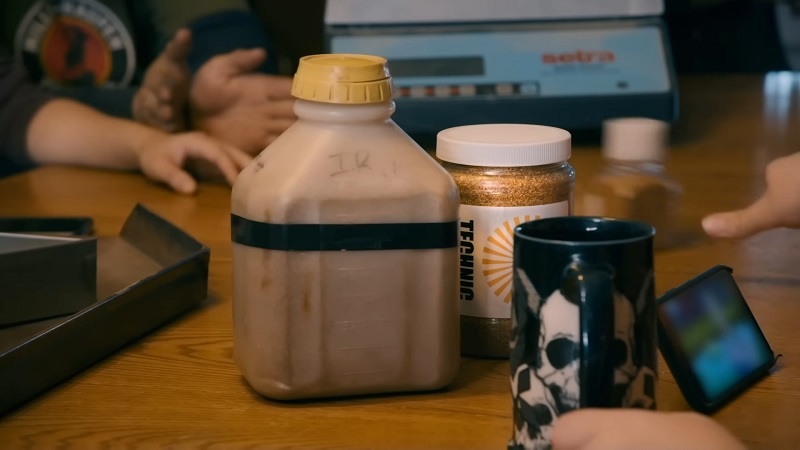
Part 2: The Winchester crew is struggling with clogged riffles due to excessive black sand in the pay dirt, reducing gold recovery efficiency.
“Meet the Crew” The Winchester crew comprises a small but dedicated team, led by mine boss Jason Fraser, backed by retired business owner John Van Tile, and featuring logger Butch Bouchard. Each member brings their unique skills and determination to this high-stakes venture.
Image: Screenshot from Tony Beets Helps The Winchester Crew Make $70,000 On The “Cursed Cut” | Gold Rush video by Discovery Australia
Part 3: The Winchester crew implements Tony’s idea, resulting in improved gold recovery and reduced downtime for cleanup.
“Unearthing Legends in ‘Cursed Cut'” The “Cursed Cut” is shrouded in legends of past failures, causing many to tread cautiously on its unforgiving soil. The ground has remained untouched since the Beets family’s departure in the previous season, setting the stage for a dramatic revival.
Image: Screenshot from Tony Beets Helps The Winchester Crew Make $70,000 On The “Cursed Cut” | Gold Rush video by Discovery Australia
Part 4: The Winchester crew implements Tony’s idea, resulting in improved gold recovery and reduced downtime for cleanup.
“Black Sands and Golden Challenges” The Winchester crew’s path is fraught with challenges, most notably the black sand clogging the riffles in their wash plant. This unwelcome impediment threatens their gold recovery and production, casting a shadow over their ambitious goals.
Image: Screenshot from Tony Beets Helps The Winchester Crew Make $70,000 On The “Cursed Cut” | Gold Rush video by Discovery Australia
Part 5: The crew recovers six ounces of gold worth $70,000, a fifth of their season goal, and they remain determined to reach their target of 200 ounces.
“Tony Beets’ Golden Solution” In a stroke of genius, Tony Beets suggests replacing the traditional riffles with hydraulic riffles, a move that could potentially turn their fortunes around. With hard work and determination, the crew implements this solution, resulting in improved efficiency and a significant boost in gold output.
Image: Screenshot from Tony Beets Helps The Winchester Crew Make $70,000 On The “Cursed Cut” | Gold Rush video by Discovery Australia
As the Winchester crew faces the unforgiving “Cursed Cut,” their determination and Tony Beets’ unwavering guidance serve as a beacon of hope. With newfound solutions to age-old problems and a promise of striking it rich, their journey is a testament to the indomitable spirit of gold miners. Whether they reach their 200-ounce goal and earn the elusive royalties remains to be seen, but one thing is certain: in the world of gold mining, every day is a new opportunity to chase the dream and defy the curse.”
Video Source: from Tony Beets Helps The Winchester Crew Make $70,000 On The “Cursed Cut” | Gold Rush video by Discovery Australia